 Personal finance
How to start investing: the right questions before the products
A Rebalix guide to savings, unexpected expenses, risk and investment decisions. With examples in euros, a few pitfalls to recognise and a monkey not to take too seriously.
 Investing
Nasdaq-100: how it works, who gets in and how the weights change
How companies are selected, how weights are calculated and when the index changes: the Nasdaq-100 rules in force since 1 May 2026, explained from the official methodologies with examples and eight illustrations.
 Investing
MSCI ACWI: which of the world’s stocks get in, how much they weigh, and what stays out
MSCI ACWI brings together large and mid cap companies from developed and emerging markets — but “All Country” does not mean the entire world. From MSCI’s methodologies read in full: how free float drives weights, why China A shares enter at 20%, what stays out, and how ACWI differs from ACWI IMI and FTSE All-World. With dated index data and ETFs measured by our register.
 Investing
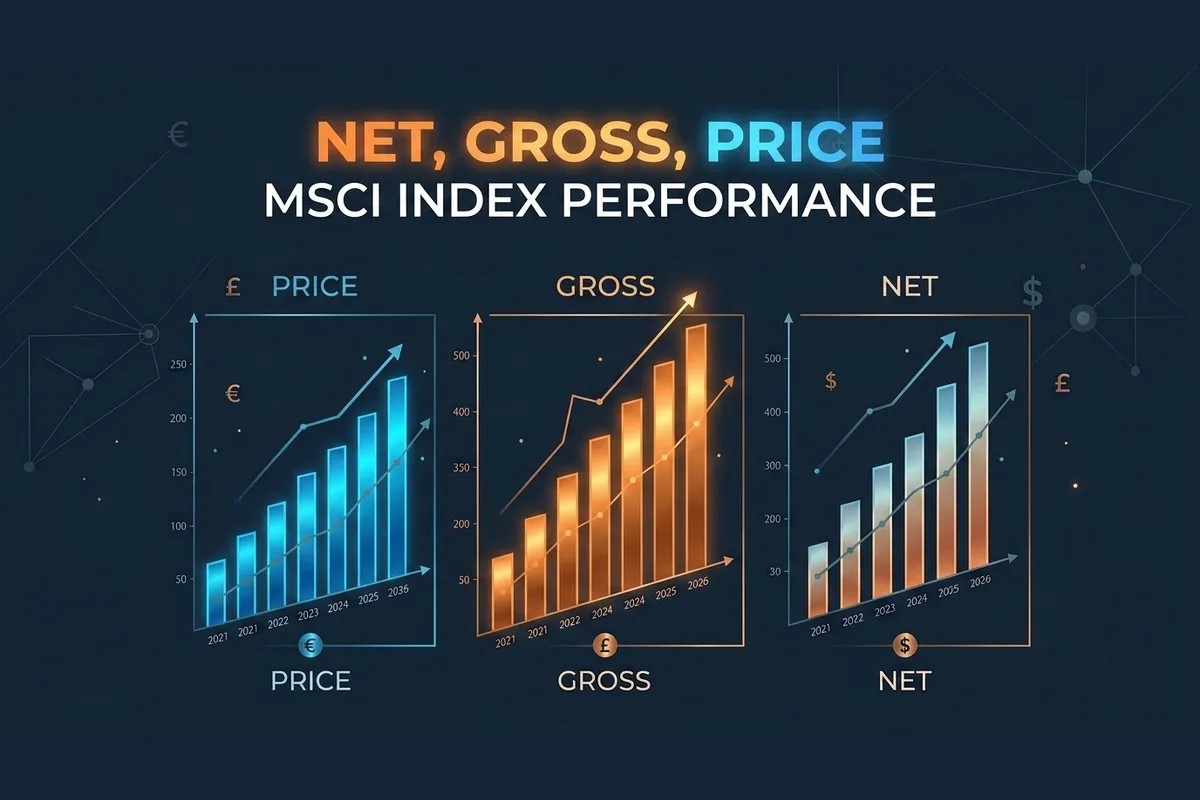
Net, Gross, Price: why one MSCI index has three returns
One index, three official returns: Price counts prices only, Gross reinvests dividends in full, Net reinvests them after the maximum withholding. From MSCI’s calculation handbook read in full: the country-by-country rates, why 5 of the 7 MSCI World ETFs we measure beat their index, and which version to use when judging a fund. Final instalment of the series.
 Investing
MSCI rebalancing day: what happens inside an ETF
Four times a year indexes change skin, and nobody notices: announcements weeks ahead, a five-day freeze, a written rule for every mishap. The logistics of day X from the MSCI handbooks, with the August 2026 review as the documented example — and what it leaves, in practice, for ETF holders.
 Investing
Accumulating or distributing ETFs? The answer also depends on where you live
Same fund, two habits: reinvest the dividends or pay them out. Maths says they are equivalent, research explains why we don’t believe it, and tax codes give nine different answers in nine countries. With real numbers from a pair of twin share classes.
 Investing
Who governs MSCI indexes? Committees, consultations and conflicts of interest
One system of committees governs every MSCI index. How it decides, when it consults the market, how much error it tolerates in writing and who supervises it: a guide built on MSCI’s official policies, read in full. Part 3 of “Inside the indexes”.
 Investing
How a stock gets into (and out of) an index
Nobody picks them: three filters, a buffer that keeps churn low, a snapshot day nobody knows, and three ways out — from MSCI’s rules read in full. Part 2 of “Inside the indexes”.
MSCI World Index: what it is, how it works, what it includes
The MSCI World is the equity index of the 23 developed markets. Who decides which stocks enter, the US weight, why the same index has three flavours: a guide built on MSCI’s official methodologies, read in full.
 Investing
C3M money-market ETF: real government bills for parking cash
C3M actually buys BOTs and their European cousins: physical replication, a 12.6% effective tax rate for Italian investors, and measured costs at half the KID figure. Nine years of data, plus a semester-by-semester tax comparison with Xeon.
 Investing
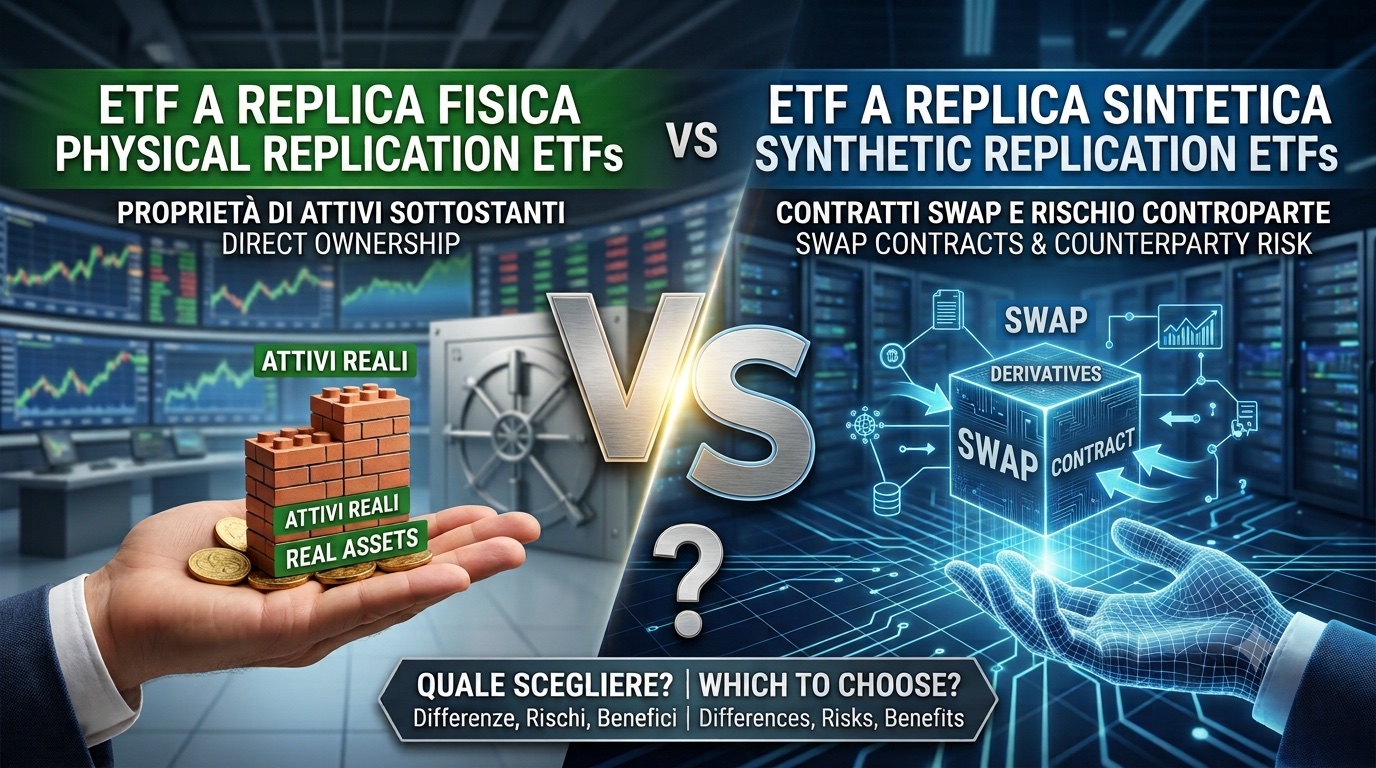
Physical or synthetic replication: what your ETF really owns
Two ETFs on the same index can own completely different things. Substitute baskets measured on real data, UCITS rules explained, per-country taxation — and the XEON case.
 Investing
Free savings plans and zero-commission ETFs: the broker observatory, updated monthly
Eight European brokers with free savings plans or zero-commission ETF lists in Italy, each verified against official sources: who actually funds the zero, when it expires, who handles your taxes — plus an ISIN lookup. No affiliate links, re-verified monthly.
 Personal finance
Italy’s stamp duty on ETFs, securities and deposit accounts: annual or quarterly reporting?
€34.20 on current accounts, 0.2% on securities and deposit accounts: your statement frequency changes when — and sometimes how much — you pay. The real rules from official sources, a calculator, and the honest story of the year-end «quail hop».
 Investing
BTP Valore guide: coupons, loyalty bonus and the new Valore Insieme
Every BTP Valore issue explained properly — including the new Valore Insieme with a single coupon at maturity: why 22.25% is not an annual rate, the loyalty bonus (where it exists), the traps to know — with a net and real yield calculator, coupon by coupon.
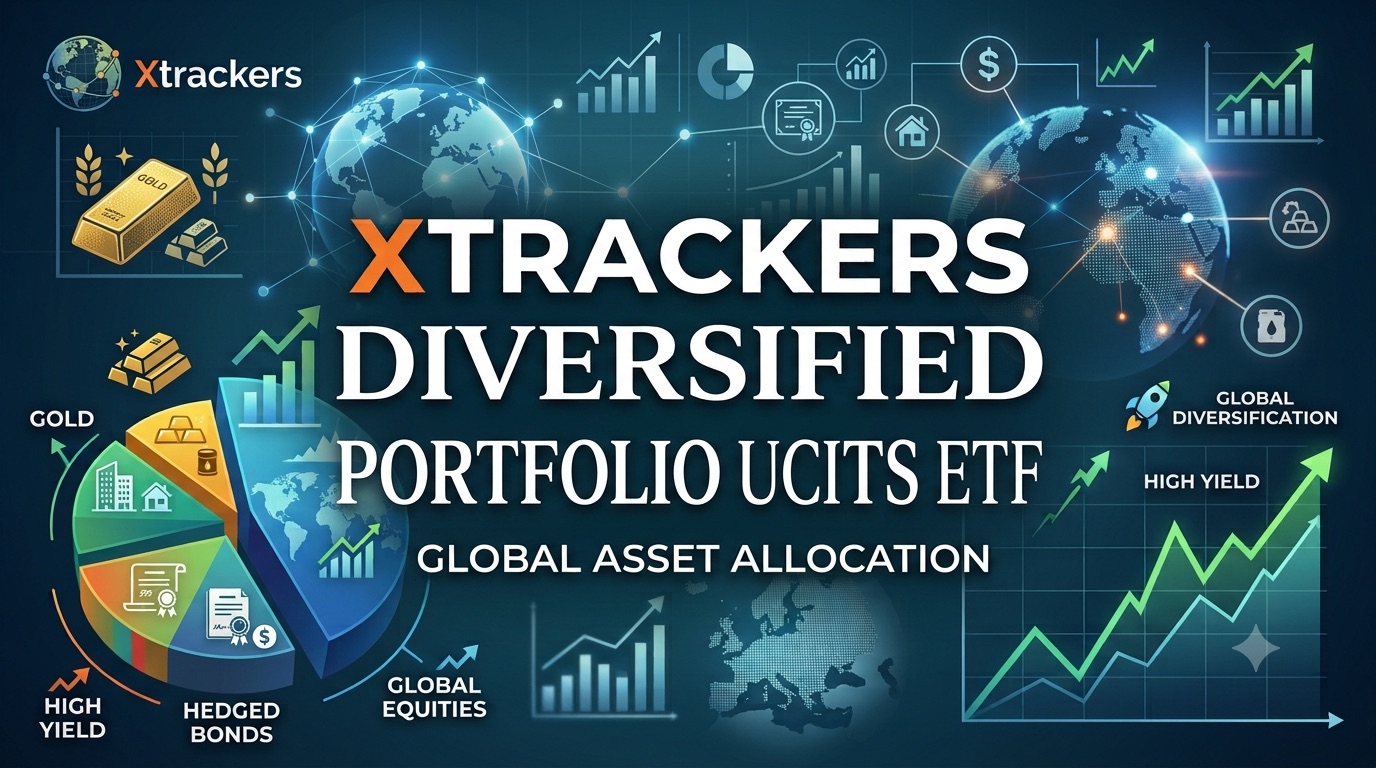
Xtrackers Diversified Portfolio: the real analysis of LifeStrategy’s new rivals
Four brand-new multi-asset ETFs with a fixed 5% gold sleeve and a record-low TER. We have X-rayed them since launch day: composition, true costs from the KIDs, the 26% tax surprise, and charts that update themselves.
 Personal finance
Compound interest: what it is, and what it’s really worth (with calculator)
What compound interest is, explained simply, with a calculator that shows the final amount — and, which almost no one does, what it’s really worth in today’s money after inflation.
 Personal finance
The 4 myths that keep you from investing (and why doing nothing is already a choice)
I don’t have enough money, I could lose it all, it’s for experts: the four myths that keep savings idle in the bank — dismantled one by one, with a calculator to see how much inflation erodes.

Vanguard LifeStrategy: the most precise analysis (real data, charts you drive)
The four Vanguard LifeStrategy funds under the microscope: what they are, whether they’re truly passive, how they behave in crashes, what they cost and what’s left after tax. Every number recomputed from official sources, every chart interactive.
 Investing
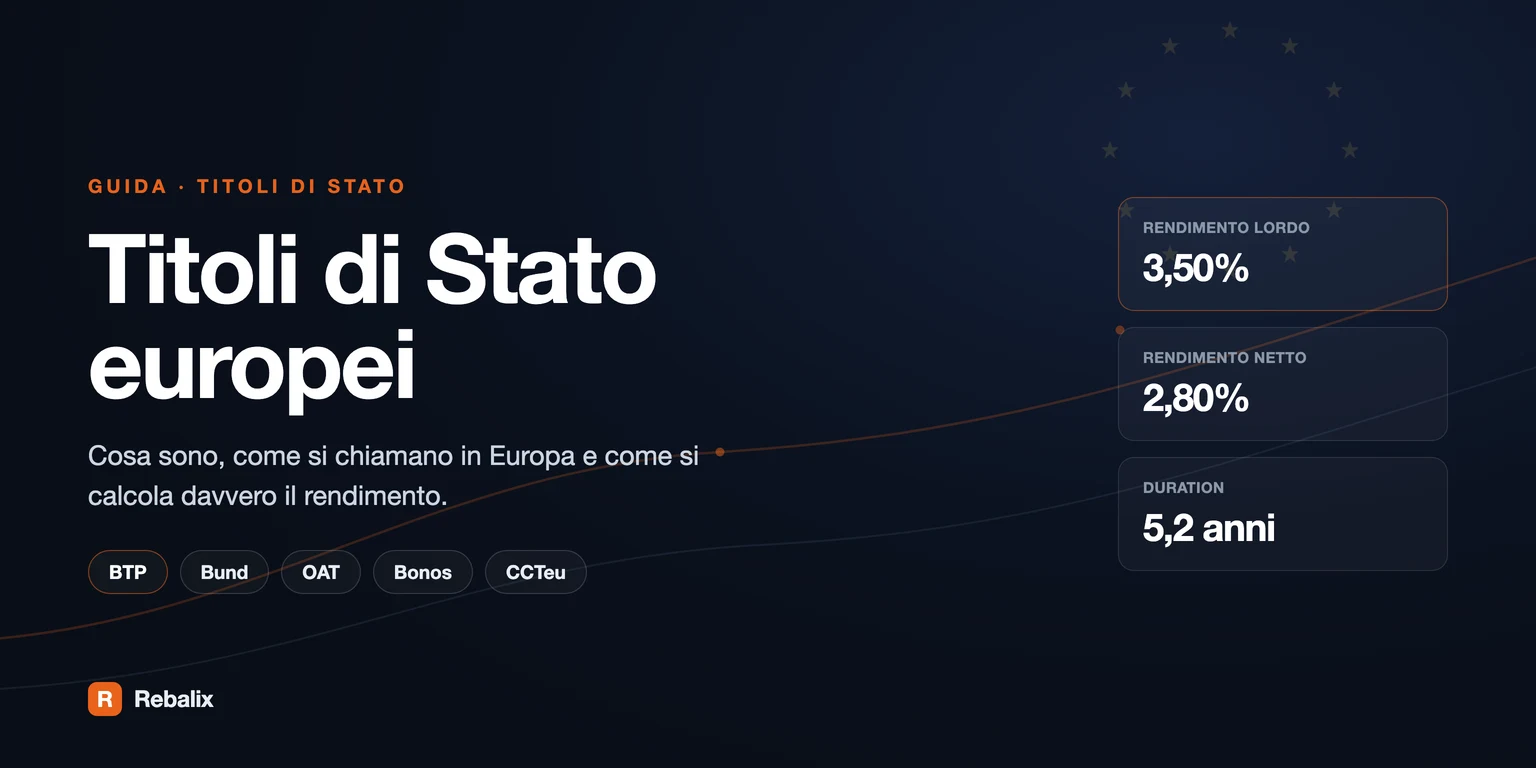
European government bonds: what they are, what they’re called, and how yield is calculated
A complete guide to euro-area government bonds — BTP, Bund, OAT, Bonos and the rest — for beginners and seasoned investors alike: what they are, how to read the metrics (gross, net, real, duration), how we compute even inflation-linked coupons to the cent, and why an archive curated from official sources beats a list.
 Investing
Bond glossary: the words your broker shows you, in plain language
Bid and ask, spread, accrued interest, duration, step-up, inflation-linked, gains and losses: the words you actually need to read your broker’s screen and understand government bonds — with examples from a real order book.
 Investing
The complete guide to BTP Futura: step-up coupons, the GDP loyalty bonus and today’s yield
The 4 BTP Futura issues explained: rising coupons already fixed to maturity, the GDP-linked loyalty bonus (and why buyers on the market today will never get it), what buying below par means — with a calculator for net and real yield, duration and the full coupon calendar.
 Investing
The complete guide to BTPs: how they work, duration, tax and yield
How a fixed-rate Italian government bond really works: above and below par, duration, the four risks, tax and stamp duty — with a calculator for the net and real return.
 Investing
The Xeon money-market ETF: what it is, what it yields, and why it isn’t «zero risk»
Is a money-market fund really shielded from losses? With the data in hand we look at Xeon, the most popular one: costs, risks, and a max drawdown that lasted nearly ten years. Plus a calculator for the real return.
 Ideas
IdeasSpreadsheet, free app or paid software: what you risk and what you gain
Three ways to track your investments, three different prices — even when you don’t pay a cent. The real pros and cons of each, and the question almost no one explains: if it’s free, who pays the bill?
 Personal finance
Supplementary pensions: how Italy’s pension funds change — automatic enrolment, costs, performance and portability
From 1 July, automatic enrolment kicks in for new hires; from 1 October, the employer contribution becomes portable. A practical guide to understanding pension funds, weighing the costs and choosing the right investment line.
 Economy
The digital euro draws closer: privacy, cash and sovereignty in the EU Parliament’s new mandate
The European Parliament has greenlit the negotiating mandate on the digital euro. What it means for privacy, cash and monetary sovereignty — and the roadmap to 2029.
 Economy
The great “middle class” deception: where you really stand on Italy’s income map
Italy’s “middle” household earns €2,642 net a month, yet almost everyone calls themselves middle class. Here is the real map of incomes and wealth — and where you actually stand.
 Ideas
IdeasWhy we started a blog (and what you'll find here)
A regular column on investing and personal finance: clear ideas, no jargon, no easy promises. Here is how we think about it.
One email when a new article is out, with Rebalix product news at the end. Nothing else: no ads, no data shared with third parties, one click to unsubscribe.